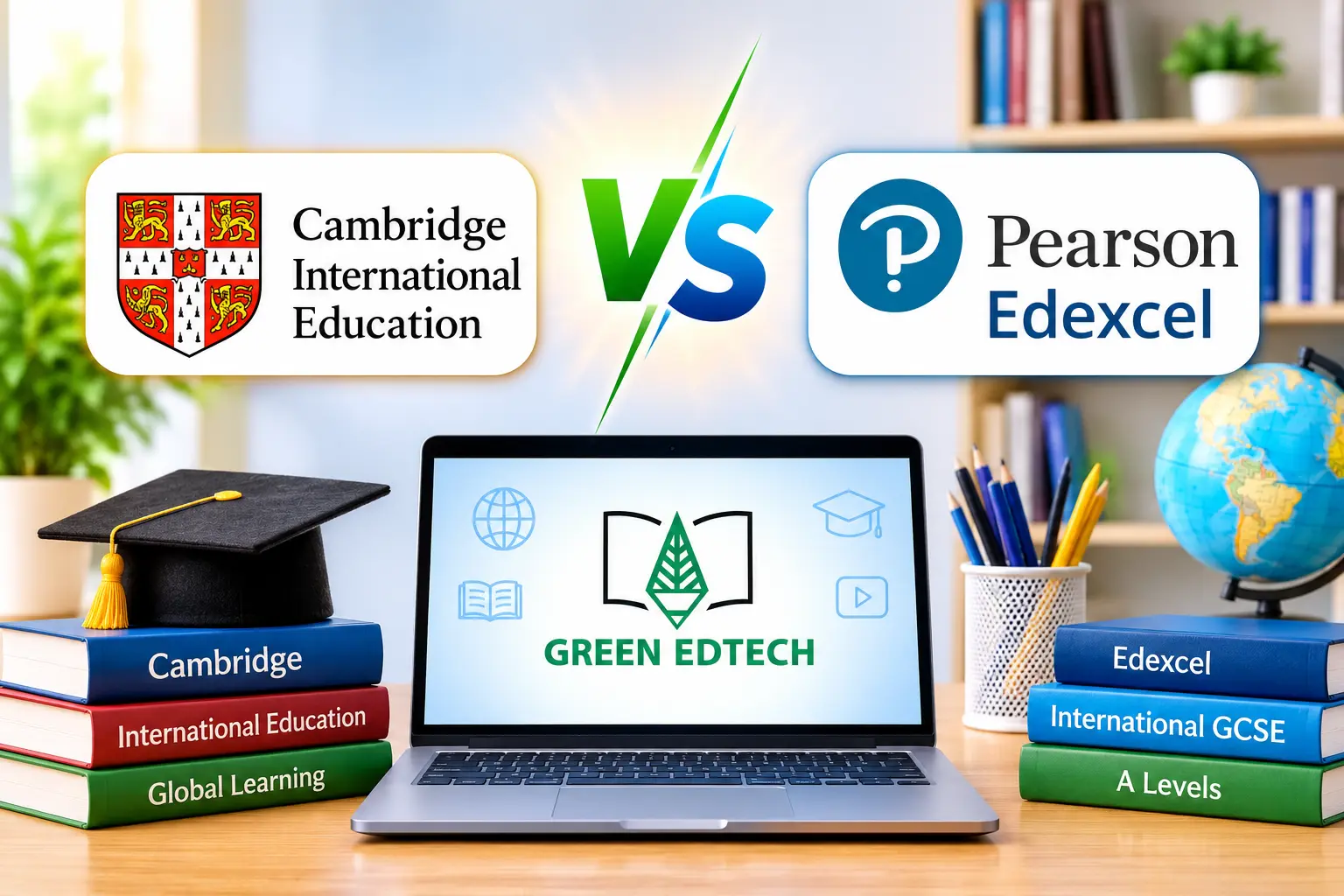

Choosing an international education system is an important step towards building a strong academic future. For students and parents exploring different schooling options, Cambridge and Edexcel are two well-established examination boards offering internationally recognized qualifications and pathways to further education. Both provide a range of subject choices and examination routes to help students progress towards their academic goals.
The right choice depends on factors such as subject availability, syllabus structure, assessment methods, grading systems, learning preferences, and future university plans. Online schooling also brings additional considerations, including teaching quality, live lesson schedules, learning resources, academic support, and examination arrangements.
Parents exploring flexible learning options can also read our guide to Online Education for Kids to understand its benefits, challenges, and considerations before choosing an online learning programme.
Understanding Edexcel vs Cambridge can help families make an informed decision. Whether a student is preparing for IGCSE examinations, planning to study A Levels, or looking for a flexible learning arrangement, comparing both systems can make the decision easier. This guide explores their differences, how online learning supports each qualification pathway, and what students should consider before enrolling.
Key Takeaway | Cambridge and Edexcel for Online Schooling
Cambridge and Edexcel both offer internationally recognised qualifications, but the right choice depends on your child’s subjects, learning needs, and future academic goals. For online schooling, compare teaching quality, academic support, and examination arrangements before choosing a programme.
At Green EdTech, students can access Oxford, Cambridge, and Pearson learning materials through structured online learning. However, our official international qualification pathways are based on Pearson Edexcel International GCSE (IGCSE/O Level) and International A Level (IAL) programmes. This guide helps parents understand the differences and choose an educational pathway that supports their child’s future.
What Are Cambridge and Edexcel?
Cambridge International and Pearson Edexcel are the exam providers that create school qualifications, courses, and tests for schools and students. Their qualifications are available, over the world and can help students move on to more learning and university depending on the rules of each school or college.
Understanding the Cambridge Education System
The Cambridge education system is provided by Cambridge International Education, which offers qualifications for stages of learning, including Cambridge IGCSE and Cambridge International AS and A Levels.
Cambridge English qualifications also help students develop practical language skills in reading, writing, listening, and speaking. These skills can support their confidence in communication and prepare them for academic and professional opportunities. Parents can explore the benefits of Cambridge English qualifications to learn more about how these exams support students’ language development.
Students interested in a structured international curriculum can explore a Cambridge online school that provides teaching, academic support, and preparation for relevant Cambridge examinations. Before enrolling, families should check whether the school offers their preferred subjects and provides a clear pathway towards the relevant qualifications.
It is important to distinguish between studying Cambridge textbooks and pursuing official Cambridge qualifications. Some online schools use Cambridge textbooks and learning resources as part of their teaching materials without offering Cambridge-awarded qualifications. Parents should confirm which examination board awards the qualification their child will pursue. At Green EdTech, students can access Oxford, Cambridge, and Pearson learning materials. At the same time, the school’s official international qualification pathways are based on Pearson Edexcel IGCSE (O Level) and International A Level (IAL) programmes.
Understanding Pearson Edexcel
Pearson Edexcel is part of Pearson, an education and assessment organization. Its qualifications provide subject-based study leading to internationally recognized qualifications. The assessment approach differs by subject and specification. Many International GCSE subjects are assessed through examinations. Pearson Edexcel offers International GCSEs alongside International A Levels and other academic programmes.
Green EdTech is a Pearson Edexcel Approved Centre (Centre No. 98474), offering students a structured pathway towards Pearson Edexcel International GCSE (IGCSE/O Level) and International A Level (IAL) qualifications. Students receive academic guidance and structured online learning support to help them prepare for their examinations.
Students often choose Edexcel International GCSE programmes when their preferred subjects, assessment formats, school arrangements, or future academic plans align with Pearson’s offerings. These qualifications can also support progression to International A Levels and further education.
Similarly, Edexcel IGCSE programmes offer subject-based learning and assessment options for students pursuing international qualifications. The choice of programme should depend on the student’s academic needs and future education goals.
What Are the Key Differences Between Cambridge and Edexcel Syllabuses?
The question “What are the key differences between Cambridge and Edexcel syllabuses?“ is an important starting point for students and parents.
A syllabus tells students what they need to learn, the knowledge and abilities they should gain, and how their learning will be tested. Even though both exam boards offer organized courses, the order of topics, test formats, and exam rules can be different for each subject.
Cambridge Syllabus Structure
Some Cambridge subjects offer Core and Extended options, while others follow different assessment structures. Students should review the relevant syllabus to determine which option is appropriate for their subject, qualification, and academic goals.
Pearson Edexcel Syllabus Structure
Pearson Edexcel syllabuses clearly outline subject content, learning objectives, assessment requirements, and examination arrangements. Depending on the subject, assessments may focus on demonstrating subject knowledge and applying concepts in written examinations.
Students should review the relevant specification to understand the topics covered, examination paper formats, and assessment objectives before beginning their studies.
Global Availability and Subject Choices
Cambridge International offers more than 70 IGCSE subjects, providing students with a wide range of academic choices. Its IGCSE qualifications are offered by over 7,000 schools across 147 countries (source: Official Cambridge Facts and Figures).
Similarly, Pearson Edexcel offers International GCSE qualifications in 37 subjects, with students taking these qualifications in more than 80 countries worldwide (source: Official Pearson International GCSE Information).
These figures highlight the international reach and subject variety of both examination boards.
How to Compare the Syllabuses?
Students should compare the subject specifications instead of relying on general assumptions about either examination board. A useful comparison should include:
- Subject topics and learning objectives.
- Examination paper formats and assessment methods.
- Practical, oral, or coursework requirements, where applicable.
- Availability of past papers and mark schemes.
- Progression requirements for the next academic stage.
Comparing these factors can help students choose a syllabus that aligns with their academic strengths and future study goals.
Grades also provide an indication of students’ academic achievement and may be considered by schools, colleges, universities, and other educational institutions.
What Are the Grading Systems Used by Cambridge and Edexcel?
Understanding grades is another essential part of choosing between Cambridge and Edexcel. Grades show how well someone did in their studies and can be looked at by schools, colleges, universities, and other places that teach people.
Cambridge Grading System
Cambridge IGCSE subjects can use the grading scale or the 9–1 scale depending on the subject and what is required. Students need to look at the syllabus and the information about the qualification to find out which grading system is used.
Cambridge International AS and A Level qualifications have their own grading. These qualifications are for advanced learning and help students get ready for college or university.
Pearson Edexcel Grading System
Pearson Edexcel International GCSE qualifications usually use the 9–1 grading scale, where Grade 9 is the highest. This system helps show different levels of academic achievement.
According to Ofqual, the UK qualifications regulator, “Grade 9 is not the same as A; it’s a new grade, designed to recognise the very highest-performing students.” This distinction helps parents understand how the Pearson Edexcel 9–1 grading system recognises outstanding academic achievement. (Source: Pearson Edexcel – Understanding the 9–1 Grading Scale)
Pearson International A Level qualifications also have their own grading system, so students should check the relevant specification when preparing for the next stage of their studies.
Why Grades Matter for Online Students
Online students should know the grading rules from the start of their course. Teachers can use these rules to help plan lessons, create practice questions, give feedback, and prepare for exams.
Students should also check what the colleges or universities they want to go to need. Requirements can be different for each school.
Which Is Better for Online Schooling: Cambridge or Pearson Edexcel?
The question, “Which is better for online schooling, Cambridge or Pearson Edexcel?” has no one-size-fits-all answer. Both examination boards offer international qualifications, and the right choice depends on a student’s preferred subjects, syllabus structure, assessment methods, and future academic goals. For online schooling, families should also consider teaching quality, access to digital learning resources, academic support, and examination preparation.
Cambridge may be a choice for a student whose preferred subjects, syllabus structure, and assessment options match Cambridge International qualifications. Pearson Edexcel may be a choice for a learner whose subject choices and preferred examination arrangements match its International GCSE and International A Level programmes.
For schooling, the provider is just as important as the examination board. Students should consider the following factors:
Subject Availability
Check that the online school offers every subject required for the students’ intended pathway. Subject availability may differ between schools even when they teach qualifications from the examination board.
Teaching Quality
Look for teachers, structured lessons, clear explanations, regular assessments, and opportunities to ask questions. These elements help students understand topics and build confidence throughout the academic year.
Learning Resources
A strong online programme should provide study materials, revision guidance, practice questions, and feedback. Students benefit when resources follow the syllabus and help them prepare for their examinations.
Examination Preparation
Ask how the school prepares students for examinations, tracks progress, and provides guidance on registration. Families should also confirm the arrangements for sitting examinations through an authorised examination centre.
Future Academic Goals
Students planning to enter a university programme should review the qualifications and subject combinations accepted by that institution. Selecting the subjects early can help maintain a clear progression route.
Ultimately, the right programme combines an examination board with effective teaching, reliable academic support and a well-planned learning schedule.
Can Students Study Cambridge or Edexcel Qualifications Through an Online School?
Students can prepare for Cambridge International or Pearson Edexcel qualifications through an online school that offers the relevant curriculum, qualified teachers, structured lessons, and examination preparation. However, families should verify which qualifications the school officially offers and how students can register for the relevant examinations. At Green EdTech, the official international qualification pathways follow Pearson Edexcel programmes.
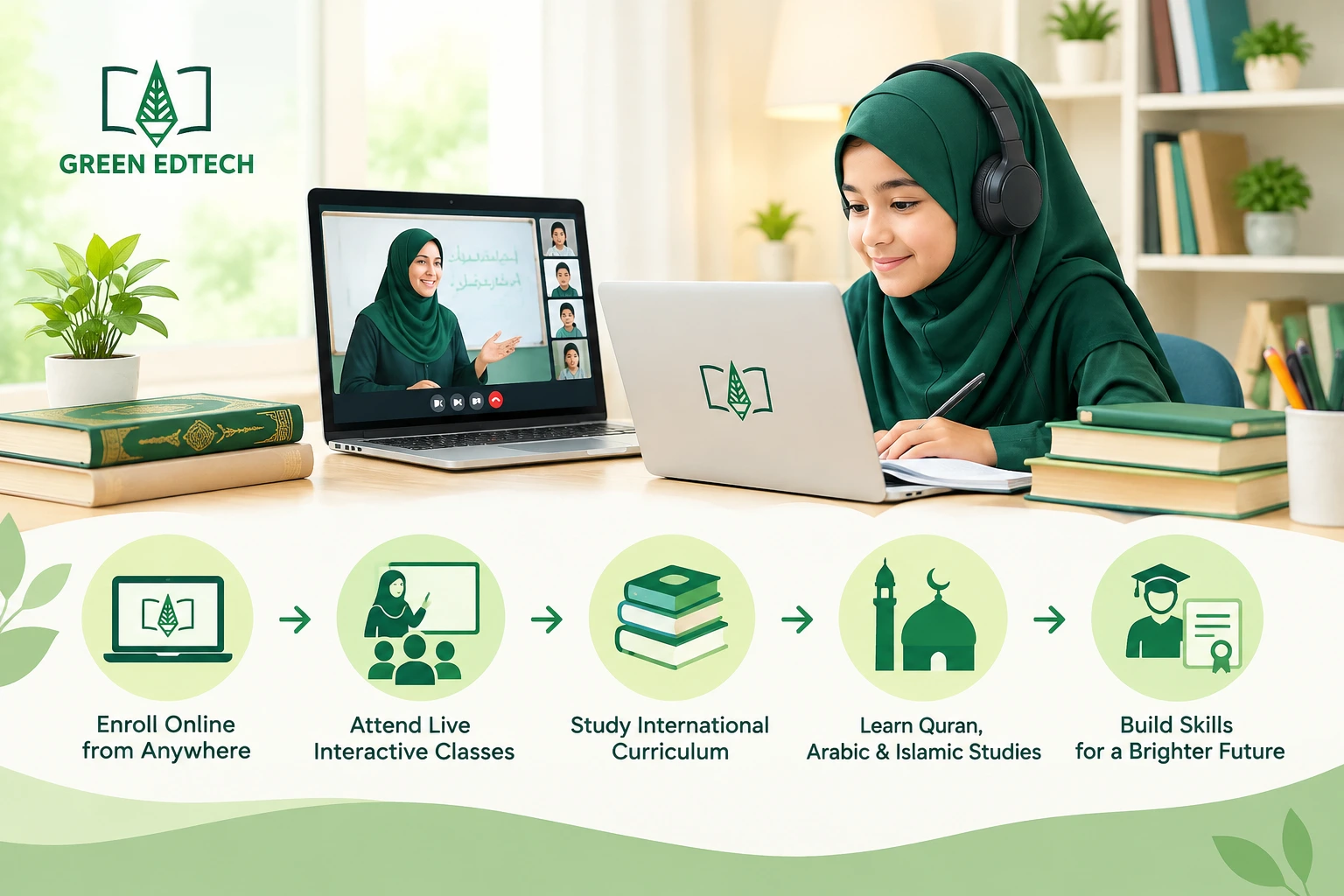
How Online Schooling Works
Here are the stages that a well‑organized online learning programme generally includes:
Step 1: Select the qualification and subjects
Students identify their level, preferred examination board, and required subjects. The school can help explain pathways and the expected study schedule.
Step 2: Complete the admission process
During online school registration, families provide the information and documents requested by the school. Families must confirm the programme, fees, timetable, and examination arrangements before finalising enrolment.
Step 3: Attend lessons and complete assignments
Students participate in scheduled classes, review learning materials, homework, and ask teachers for clarification when needed. A consistent routine supports academic progress.
Step 4: Track academic performance
Teachers may use quizzes, assignments, mock examinations, and individual feedback to identify learning goals. Students can use this feedback to strengthen their understanding of each topic.
Step 5: Prepare for official examinations
The school supports revision according to the syllabus and examination requirements. Families should confirm how examination entries are arranged and where students will sit their papers.
Online schooling offers a way to study international qualifications while learning from home. The exact services, lesson formats, and examination arrangements depend on the chosen provider.
What to Consider When Choosing a Cambridge Online School
When exploring an international academy, families should carefully evaluate the school’s academic structure, teaching approach, and student support before choosing an online education provider.
A suitable school should clearly explain its curriculum, subject options, teaching methods, assessment schedule, and examination arrangements. Parents should also ask how teachers communicate students’ progress and what support is available when they need help understanding difficult topics.
A Cambridge home school online programme may suit families who prefer a home-based learning environment with structured lessons and access to academic guidance. A good programme combines flexibility with clear learning objectives, consistent teaching, and regular progress monitoring.
Before enrolling, consider these questions:
- Does the school offer the required Cambridge subjects?
- Are lessons delivered live, recorded, or through a combination of formats?
- How often do teachers assess students’ progress?
- What learning resources are included?
- How are examination entries and examination-center arrangements handled?
- What support is available for both parents and students?
Families should also verify the provider’s status and understand the arrangements through which students can access the relevant qualifications. This helps parents make an informed decision and choose a programme that meets their child’s academic needs.
Cambridge International A Levels and Pearson International A Levels
After completing IGCSE or International GCSE qualifications, many students progress to study before university. Cambridge International A Levels and Pearson International A Levels provide topic‑based pathways for this stage.
Cambridge International A Levels
Cambridge International A Levels allow students to develop in-depth knowledge in selected subjects. Cambridge typically offers a two-year A Level programme, with AS Level often structured as a one-year course. Depending on the subject, students may have the option of staged assessment or completing the qualification in one examination session.
These qualifications help students prepare for higher education by building subject knowledge, encouraging independent study habits, and developing analytical skills.
Students and parents can explore our guide to A Level Cambridge School to understand Cambridge A Level education, its academic structure, and opportunities for further study.
Pearson International A Levels
Pearson International A Levels offer another way to pursue academic study. The structure and assessment methods vary depending on the subject and the specific qualification. Students need to look at the course details and university requirements before picking their subjects.
Planning the Transition to University
Students need to pick subjects thinking about their planned degree programme. For instance, a student who wants to study science, engineering, business, or humanities might need specific subject combinations for admission.
Looking at university entry requirements early helps students and parents plan the qualification path and know the grades needed for their goals.
What Resources Are Available for Students Preparing for Cambridge and Edexcel Examinations?
The question “What resources are available for students preparing for Cambridge and Edexcel examinations?” is especially important for learners, who get the most out of organized study materials and regular feedback.
Both examination boards provide qualification information and subject-related resources. Students can use these materials with lessons from their school.
Recommended Study Resources
Official syllabuses and specifications
These documents cover the subject content learning goals, and how students will be assessed. Students should use the most recent version that matches their examination session.
Past papers
Past papers help learners understand examination formats, practice applying their knowledge, and become familiar with exam instructions. Students should use practice papers that match their subject and syllabus to ensure their preparation is relevant to the examination requirements.
Mark schemes
Mark schemes explain how marks are awarded for answers. Reviewing mark schemes after completing a practice paper helps students understand the expected level of detail and improve exam technique.
Examiner reports
Where available, examiner reports provide insights into common areas of difficulty and ways students can strengthen responses.
Online lessons and revision sessions
Teacher‑led explanations, topic‑based revision and practice sessions can help students review concepts. Resources should match the examination board and subject specification for students.
Personal study schedules
A weekly revision plan helps students divide the syllabus into sections. Scheduling practice, review sessions, and breaks can support consistent preparation.
Are Cambridge and Edexcel Suitable for International Students?
Both Cambridge and Edexcel offer internationally recognized qualifications that can support progression to further education and university. However, acceptance depends on the receiving institution’s admission policies, required subjects, grades, and other entry criteria. Students planning to study abroad should check the specific requirements of their preferred universities before selecting their qualifications.
According to the British Council, both Cambridge International and Pearson Edexcel qualifications are internationally recognized, while Pearson describes International GCSE qualifications as supporting progression to International A Levels and universities. Actual entry decisions remain subject to the requirements of the receiving institution.
For students, the most important considerations include:
- Availability of the required subjects in students’ location.
- Curriculum suitability for students’ educational background.
- Language and academic support provided by the school.
- Access to an authorized examination center.
- Recognition and entry requirements of students’ intended university.
- Documentation and qualification requirements in the country where students plan to study.
Students who may relocate or apply to universities abroad should check the admissions guidance before choosing subjects. This makes it easier to plan a qualification route that fits students’ long‑term goals.
How to Choose the Right Online School?
Choosing the right online school involves more than simply comparing course titles. Parents should look for a school that supports students’ academic development, provides effective teaching, and clearly explains its programmes, learning resources, and available support services.
Review the Curriculum
Parents should check which examination board the school follows and whether it offers the required subjects. They should also review the relevant syllabus and ask how the school prepares students for official examinations.
Compare Teaching Methods
Some students benefit from live classes, while others may prefer a combination of live lessons and recorded videos. Parents should ask how teachers respond to students’ questions, provide feedback, and support different learning needs.
Check Academic Support
Regular progress reports, mock examinations, revision sessions, and teacher meetings can help students stay on track. Families should understand how the school monitors academic performance and supports students throughout the school year.
Understand Fees and Registration
Parents should request a clear breakdown of tuition fees, registration costs, learning materials, and any additional examination fees. They should also confirm which services are included before making a decision.
Explore a Trial Lesson
A trial lesson allows students and parents to experience the school’s teaching style, lesson structure, and online learning environment. It also allows families to ask questions about available programs, class schedules, and academic support.
Students searching for online classes near me should compare providers that accept learners from their area. Although online schooling allows students to learn from different locations, families should also consider curriculum availability, time zone compatibility, examination arrangements, and the level of teaching support offered by the school.
Is Edexcel the Same as Pearson?
The question “is Edexcel the same as Pearson“ is common among parents comparing international qualifications.
Edexcel is a qualification and assessment brand that’s part of Pearson. Because of this, Pearson Edexcel International GCSEs are considered Pearson qualifications. The terms “Pearson” and “Edexcel” are often used together when talking about these programmes.
Cambridge International, on the other hand, is a different examination board. It provides its own set of qualifications, including Cambridge IGCSE and Cambridge International AS and A Level. These are not the same as Edexcel qualifications, even though both are widely used in education.
When looking at programmes, families should always use the full name of the qualification. They should also check the awarding organization, the syllabus code, the assessment methods, and the grading scale. This helps them make sure they are choosing the course offered by an online school.
How to Complete Online School Registration
The online school registration process may vary from one provider to another. Students can make things easier by getting their academic details and questions ready ahead of time.
A typical registration process includes the following steps:
Choose the programme: First, decide whether Cambridge International or Pearson Edexcel is a fit for the student’s subject needs and long-term educational goals.
Review eligibility: Check the entry requirements, available year groups, and required previous qualifications.
Speak with an adviser: Discuss subject choices, class schedules, teaching support, and examination arrangements.
Submit the application: Provide the documents and details requested by the school.
Confirm the learning plan: Review the timetable, course materials, fees, and expected academic milestones.
Begin lessons: Access the school’s learning environment and follow the study plan agreed with the teaching team.
A clear registration process helps families understand the programme before lessons begin. Students should keep copies of important documents and confirm examination deadlines with the school.
How Green EdTech Supports Your Online Learning Journey
Students looking for an online education provider should explore the learning programmes and academic support it offers. Before choosing a school, families should review the available courses, examination boards, teacher support, and admission requirements to ensure the programme meets their child’s educational needs.
At Green EdTech, students can access Oxford, Cambridge, and Pearson learning materials alongside structured online lessons and academic guidance. The school’s official international qualification pathways follow Pearson Edexcel IGCSE (O Level) and International A Level (IAL) programmes.
A good online learning environment should clearly explain what is expected in each subject, give well-organized lessons, and help students track their progress. Parents should also be able to see how the school communicates with families.
If you’re comparing Cambridge and Edexcel programmes, ask the provider about which subjects they offer, when lessons happen, what study materials are available, how progress is measured, and how exams are arranged. These details can help you decide if the programme matches your child’s needs and future goals.
Book a Free Demo Class
A demo class lets you see how the teacher teaches, understand how online lessons work, and ask questions about the programmes.
Book a free demo class to learn more about the online learning experience, talk about your subjects, and find out the next steps for enrolment. Having a conversation with the team can help you compare choices and make a confident decision.
Frequently Asked Questions
Which is better for online schooling, Cambridge or Edexcel?
Both Cambridge and Edexcel offer recognised qualifications suitable for different learning needs. The right choice depends on subject availability, syllabus structure, assessment methods, and future academic goals. Parents should also compare teaching quality, learning resources, and examination support before selecting an online school.
Does Green EdTech offer Cambridge qualifications?
Green EdTech provides Oxford, Cambridge, and Pearson Edexcel learning materials to support students’ studies. However, its official international qualification pathways are based on Pearson Edexcel IGCSE (O Level) and International A Level (IAL) programmes. Parents can contact the admissions team for details about available subjects and qualification pathways.
What are the main differences between Cambridge IGCSE and Pearson Edexcel International GCSE?
The main differences are in the details of how assessments are done and how grades are given. Cambridge IGCSE subjects might use testing methods and grading scales, while Pearson Edexcel International GCSEs often use the 9–1 grading scale. Students should check the subject details for what they want to study.
Can students complete IGCSE qualifications online?
Students can. Prepare for IGCSE or International GCSE qualifications through online schools that offer the right curriculum. Official exam plans depend on the qualification, the exam board, and which authorized centers are available.
Are Cambridge and Edexcel qualifications recognized internationally?
Both qualifications are recognized around the world. Whether a particular course or university will accept them depends on the institution’s entry rules and the student’s subject choices and grades.
What is the difference between Cambridge International A Levels and Pearson International A Levels?
Both offer subject-based qualifications for students moving toward higher education. Their course structures, assessment methods, and subject details can be different, so students should review the qualification information before signing up.
What should parents check before choosing an online school?
Parents should check availability, teacher qualifications, lesson schedules, learning resources, academic support, fees, exam arrangements, and the provider’s status. A demo class can also help families get a feel for the teaching environment.
How can students prepare for Cambridge and Edexcel examinations?
Students can follow the syllabus, attend structured lessons, practice past papers, review mark schemes, use examiner reports when available, and stick to a regular revision plan.
Can international students study these qualifications from home?
Yes. Online providers may offer lessons to students in different locations depending on their admission rules and course availability. Students should confirm if the class times fit their time zone and how official exams will be arranged.
Conclusion
Choosing between Cambridge and Edexcel becomes easier when families understand the differences in syllabuses, assessment methods, grading systems, and academic progression. Both examination boards offer international qualifications, but the right choice depends on each student’s learning needs, subject preferences, and future academic plans.
The key is to select an option that matches the students’ subjects, learning style, academic strengths, and future university plans. Families should compare specifications, review the school’s teaching approach, and confirm examination arrangements before enrolling.
For families considering Green EdTech, note that the school uses Oxford, Cambridge, and Pearson learning materials. At the same time, its official international qualification pathways follow Pearson Edexcel IGCSE and International A Level programmes. This distinction helps parents make an informed decision about their child’s education.
A well-planned online education experience combines structured lessons, effective study resources, regular feedback, and clear academic guidance. By reviewing these factors, students and parents can choose a suitable learning pathway and prepare confidently for the next stage of education.
