
The digital age has transformed the way children learn, with online education becoming an increasingly popular option for families seeking flexibility and quality learning experiences. From an online learning academy to interactive courses, students now have access to a variety of tools and resources. Many educational websites in Pakistan and global educational websites offer structured learning opportunities that support diverse academic needs. Parents can also find programs focused on online Darse Nizami and online Islamic education, helping create a balanced and meaningful learning experience for students. As online education in Pakistan continues to grow, understanding the right education curriculum becomes essential.
In Online Education for Kids: Benefits and Challenges, we’ll explore the benefits, challenges, and key considerations to help you make an informed decision.
The Rise of Online Education
The internet has revolutionised education, making quality online education accessible from anywhere. With interactive lessons, virtual classrooms, online school classes, and resources from an online learning academy, as more families explore flexible learning options, online education has become a practical alternative to traditional schooling. From international curricula to skill-based courses, children can now access quality education from anywhere.
Benefits of Online Education for Kids
1. Flexibility and Convenience
One of the biggest advantages of online learning is flexibility. Students can learn at a pace that matches their abilities while families have greater control over daily schedules. Many online schools also simplify enrollment through digital online registration, making the admission process faster and more convenient.
2. Personalized Learning
Adaptive learning platforms cater to each child’s individual strengths and learning needs, helping improve comprehension and retention. Many online schools also offer trial or demo classes, allowing parents and students to experience the teaching style before enrolling.
3. Access to a Wide Range of Resources
Students can explore diverse subjects and online courses beyond the limitations of traditional schools. International Academy and educational websites in Pakistan provide flexible learning opportunities that expand knowledge, improve skills, and support academic growth for students in a modern digital learning environment.
4. Safe Learning Environment
Many accredited online schools provide secure virtual classrooms, teacher supervision, and supportive learning environments that help students stay focused while learning from home. For example, International Academy, an online school in Pakistan, offers a well-organized learning experience that supports students’ academic progress while providing flexibility for families.
5. Improved Technical Skills
Engaging with digital tools prepares kids for a tech-driven future, equipping them with essential skills. Digital learning platforms help children become comfortable with technology while improving their academic performance through structured lessons, interactive activities, and flexible learning resources.
Practical Observation
Many parents notice that children become more independent learners after several months of online education. As they attend virtual classes regularly, they gradually learn to manage assignments, communicate confidently with teachers through digital platforms, and organize their daily study schedules. These self-management and digital communication skills can also benefit them in higher education and future careers.
Challenges of Online Learning
1. Lack of Social Interaction
Unlike traditional schools, online education limits face-to-face peer interaction, which can impact social development.
2. Increased Screen Time
Extended screen exposure may lead to eye strain, reduced physical activity, and other health concerns.
3. Parental Involvement Required
Parents or guardians need to monitor and assist with their child’s learning, which can be demanding.
4. Potential Distractions at Home
Home environments may not always be conducive to focused learning, with distractions affecting productivity.
5. Limited Extracurricular Activities
Physical education, group projects, and extracurricular activities are often less available in online settings.
How to Decide if Online Education is Right for Your Child
1. Assess Your Child’s Learning Style
Children who thrive in self-paced, tech-based environments may benefit from online learning, while others may require structured, in-person engagement.
2. Consider Family Schedule and Resources
Evaluate whether your family can provide the necessary time, supervision, and technological support. An online school environment, supported by interactive online school classes and a demo class experience, helps parents understand the learning process better and ensures children receive proper guidance, structure, and academic support in a flexible digital setting.
3. Research Accredited Online Schools
Not all online programs are created equal. Look for accredited, high-quality platforms with positive reviews. Online schools offering accredited IGCSE (O Level) and IAL (A Level) qualifications provide structured learning, qualified teachers, and reliable academic standards. Choosing the right program can help students enjoy a positive learning experience, build strong foundations, and work toward long-term academic success in a supportive and engaging environment.
4. Balance Online and Offline Activities
Ensure your child has opportunities for socialization, outdoor activities, and hands-on learning experiences. Online K-12 Education programs should also encourage interaction, creativity, and real-world engagement alongside academic learning. A balanced approach helps students develop strong communication skills, stay active, and enjoy a well-rounded, supportive, and healthy educational journey.
5. Try Hybrid Learning Options
A mix of online and in-person learning may provide the best of both worlds, addressing flexibility and social interaction needs.
Pros and Cons of Online Education for Kids
Before making a decision, parents should understand both the advantages and limitations of online education.
| Pros | Cons |
|---|---|
| Flexible study schedule | Less face-to-face interaction |
| Personalized learning pace | Requires self-discipline |
| Access to global teachers and courses | Increased screen time |
| Safe learning environment | Parents need to supervise younger children |
| Learn from anywhere | Internet and device dependency |
| Wide range of academic resources | Limited extracurricular activities |
Healthy Online Learning Habits
While online education flexibility offers unmatched freedom, it works best when combined with healthy routines. Children who follow a structured timetable, take regular screen breaks, and participate in outdoor or community activities often achieve better academic and emotional outcomes than those spending the entire day online.
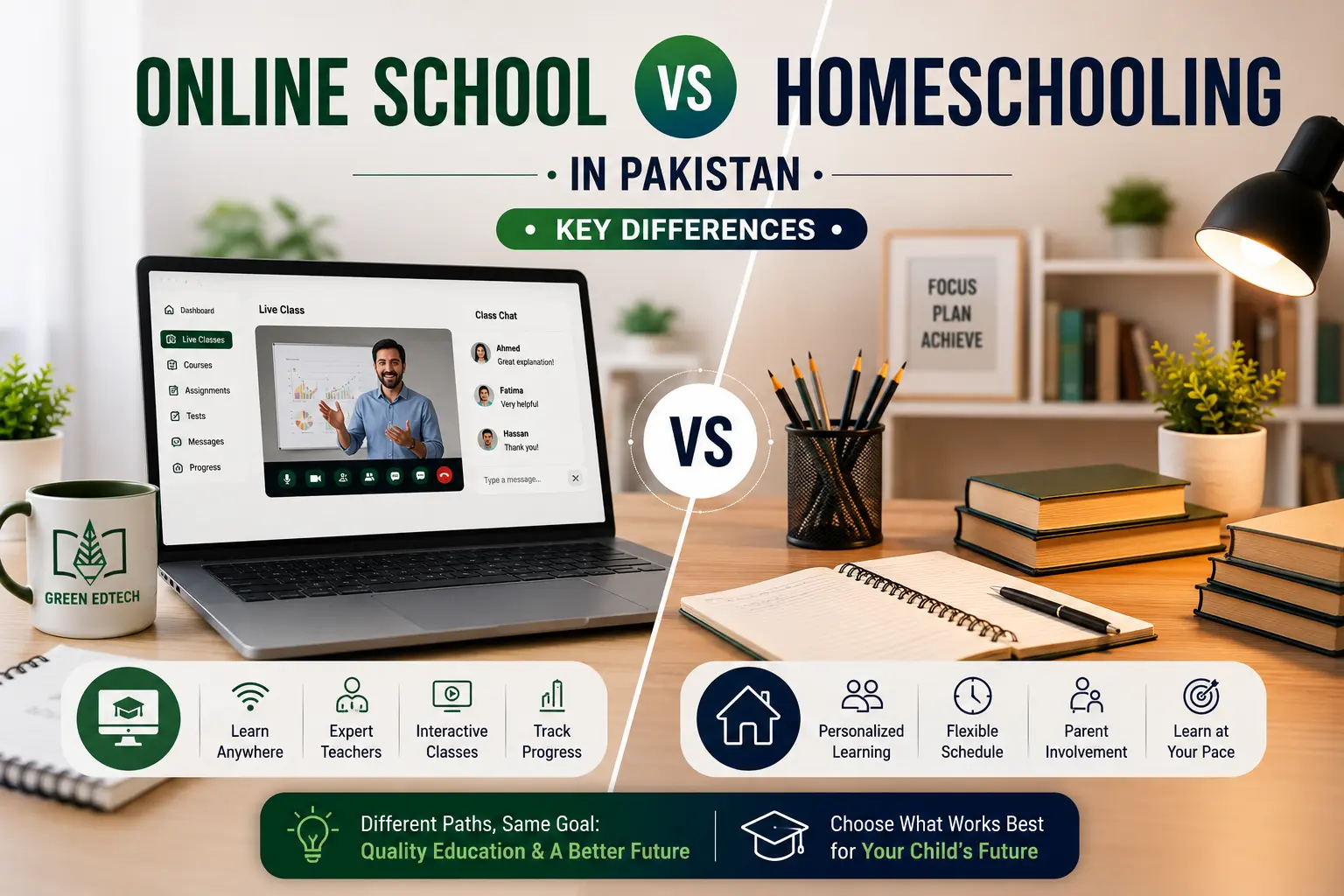
Homeschooling vs Online Education: What’s the Difference?
Many parents assume homeschooling and online education are the same, but they are different learning models.
| Homeschooling | Online Education |
|---|---|
| Parents teach the curriculum | Certified online teachers deliver lessons |
| Parents create lesson plans | School provides structured curriculum |
| Flexible assessment methods | Standardized assessments |
| Parent is primary educator | Teacher is primary educator |
| More parental involvement | Less daily teaching responsibility for parents |
Which One Is Better for Your Child?
If parents have the time and confidence to teach multiple subjects, homeschooling can be a suitable option. However, families looking for structured lessons, qualified teachers, and internationally recognized qualifications often find online education to be a more practical solution.
Example
For example, a Grade 6 student interested in coding may benefit from online education because many online schools offer specialized technology courses that may not be available in traditional homeschooling programs. On the other hand, a younger child who requires constant parental guidance may thrive in a homeschooling environment where lessons can be tailored to their pace and interests.
Conclusion
Online education offers numerous benefits but also presents challenges that require careful consideration. By assessing your child’s needs, researching options, and maintaining a balanced approach, you can determine if online learning is the right choice for your family. Online K 12 Education programs should also encourage interaction, creativity, and real-world engagement. K12 International Academy provides flexible and structured learning opportunities for diverse student needs.
Understanding the international school fee structure allows parents to make informed decisions that match their budget and goals. In online education in Pakistan, families are increasingly adopting digital learning for its convenience and quality access. Ultimately, the right learning model depends on each child’s personality, learning style, and family circumstances.
Some students excel in fully online environments, while others benefit from a blended approach that combines digital learning with in-person interaction. Evaluating academic goals, social development, and available support at home will help parents choose the most suitable educational path. For parents exploring the long-term benefits of digital learning, our article, Online Education is the Best Investment for Your Future, explains how online education can support academic growth and future career readiness.
Frequently Asked Questions (FAQs)
1. Is online education effective for children?
Yes. Online education can be highly effective when students receive proper guidance, follow a consistent study schedule, and learn through accredited programs with qualified teachers.
2. At what age can children start online learning?
Many online schools offer programs starting from preschool. However, younger children generally require greater parental involvement than older students.
3. Is online education recognized in Pakistan?
Yes. Many online schools in Pakistan offer internationally recognized qualifications such as IGCSE (O Levels), IAL (A Levels), and other accredited curricula. Parents should always verify accreditation before enrolling.
4. Can online students develop social skills?
Yes. Many online schools organize virtual clubs, discussion forums, collaborative projects, competitions, and occasional in-person events that encourage communication and teamwork.
5. How many hours should children spend learning online?
The ideal study duration depends on age. Younger children benefit from shorter sessions with regular breaks, while older students can manage longer structured learning periods.
6. Is online education cheaper than traditional schooling?
It depends on the institution. While many families save on transportation, uniforms, and accommodation, tuition fees vary depending on the curriculum and school.
7. What equipment is required for online learning?
Students generally need:
- Stable internet connection
- Laptop or desktop computer
- Webcam and microphone
- Quiet study space
- Learning management platform access