
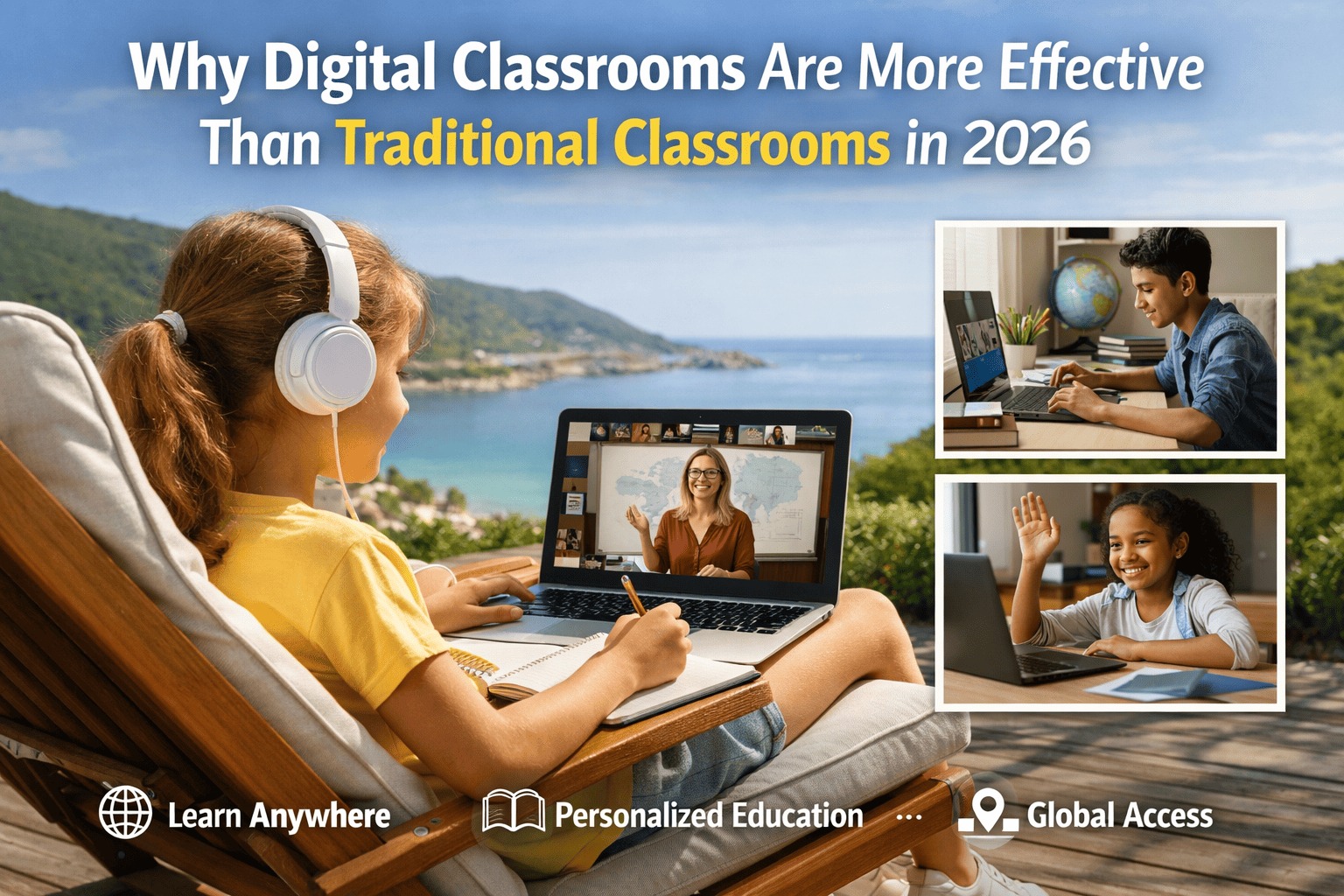
What if your child’s classroom could travel with them, whether it’s on a sunny afternoon abroad or in a peaceful corner of their home? In 2026, that idea is no longer futuristic; it is happening in real time through an online international school and an online school model. Now, digital classrooms and online classes are available in many school systems, turning your children’s screens into spaces where curiosity meets learning flexibility, including homeschooling curriculum and online study in Pakistan, and where education no longer waits for bell schedules or rigid routines.
Even though traditional schools and the importance of school remain strong, many parents and institutions consider online primary schools, preschool programs, senior school options, IGCSE schools in Karachi, A level and O level pathways, and even online Islamic school alternatives. Since COVID-19, online education, tutor in Karachi support, and Edexcel certificate pathways have grown, alongside searches like schools near my location and nearby schools. It offers convenience, sustainability, personalization, and global access for all learners in online study in Pakistan. Here are the reasons digital classrooms are proven to be more effective than traditional schooling systems:
Escaping Long Commutes to Schools
For a lot of families, going to school every day isn’t just a hassle. It takes up time and energy and can even be emotionally exhausting. Parents are all too familiar with long traffic jams, early mornings, and the constant juggling of drop-offs and pickups. Digital classrooms remove this stress entirely through online school, online classes, and homeschooling programs, allowing families to choose online primary schools, senior school options, and elementary school alternatives.
Instead of searching for schools near me or comparing international school fee structures at a Karachi international school, parents increasingly prefer online study in Pakistan with flexible school application processes.
This includes A level and O level pathways supported by a tutor in Karachi, online Islamic school options, Edexcel certificate preparation, and highlights the importance of school while still offering IGCSE schools in Karachi and preschool programs for early learners. Making digital education a practical and modern alternative for families worldwide today and in the future, learning.
Learning That Beats the One-Size-Fits-All Approach
In typical classrooms, teachers often have to deal with a lot of different students at once. Many teachers try hard to help all of their students do well in school, but it can be hard to provide each child with the right instruction in a busy, noisy classroom.
Digital Classrooms Taking Over Traditional Schooling improves the education curriculum by offering flexibility and reinforcing the importance of school while supporting online study in Pakistan and homeschooling programs.
It also helps families connected to Karachi International School, online classes, Islamic studies, and online Dars e Nizami course options, while parents search for the best schools near me for guidance.
With supportive technology and personalized education pathways, students gain confidence and independence, making digital learning a practical alternative for modern families seeking quality education without geographical limits, strengthening learning outcomes and accessibility across diverse academic needs and environments today, including Karachi school system reforms and curriculum integration focus globally.
Global Access to Quality Education
One of the most exciting advantages of digital classrooms is their widespread reach. Geographic location no longer limits access to quality education. A student in interior Sindh can access the same high-quality education as a learner in Dubai, London, New York, and other Asian cities through an International School or online study platform. Homeschooling curriculum options and schools in Karachi alternatives are also expanding.
Online platforms offer opportunities that traditional classrooms often cannot, especially where good schools near me searches return limited results due to limited resources. This reflects the importance of school while also supporting Islamic studies and Darse Nizami online learning options. Families can complete school application processes and even enroll now in flexible programs. This global accessibility is more than convenience; it connects learners worldwide with expert teachers and diverse academic communities across the world today
Smart Learning Option for Smarter Generation
Digital classrooms are changing the way we think about education today. They offer a system that better meets today’s Gen-Z students’ needs, such as reducing waste, offering more learning flexibility through online classes and online school systems, and fostering a deeper connection between curiosity and learning material, rather than merely serving as a temporary replacement for traditional education. This shift also supports online study in Pakistan, homeschooling, and international school pathways, including A level and O level as well as IGCSE schools in Karachi, while still highlighting the importance of school in child development.
The benefits are evident for parents considering homeschooling curriculum, preschool programs, senior school options, or searching for a tutor in Karachi support, as well as schools evaluating education technology for modern learning environments. Digital classrooms are easier to manage, align with online Islamic school options, and provide structured pathways such as Edexcel certificate programs, making learning more accessible globally.
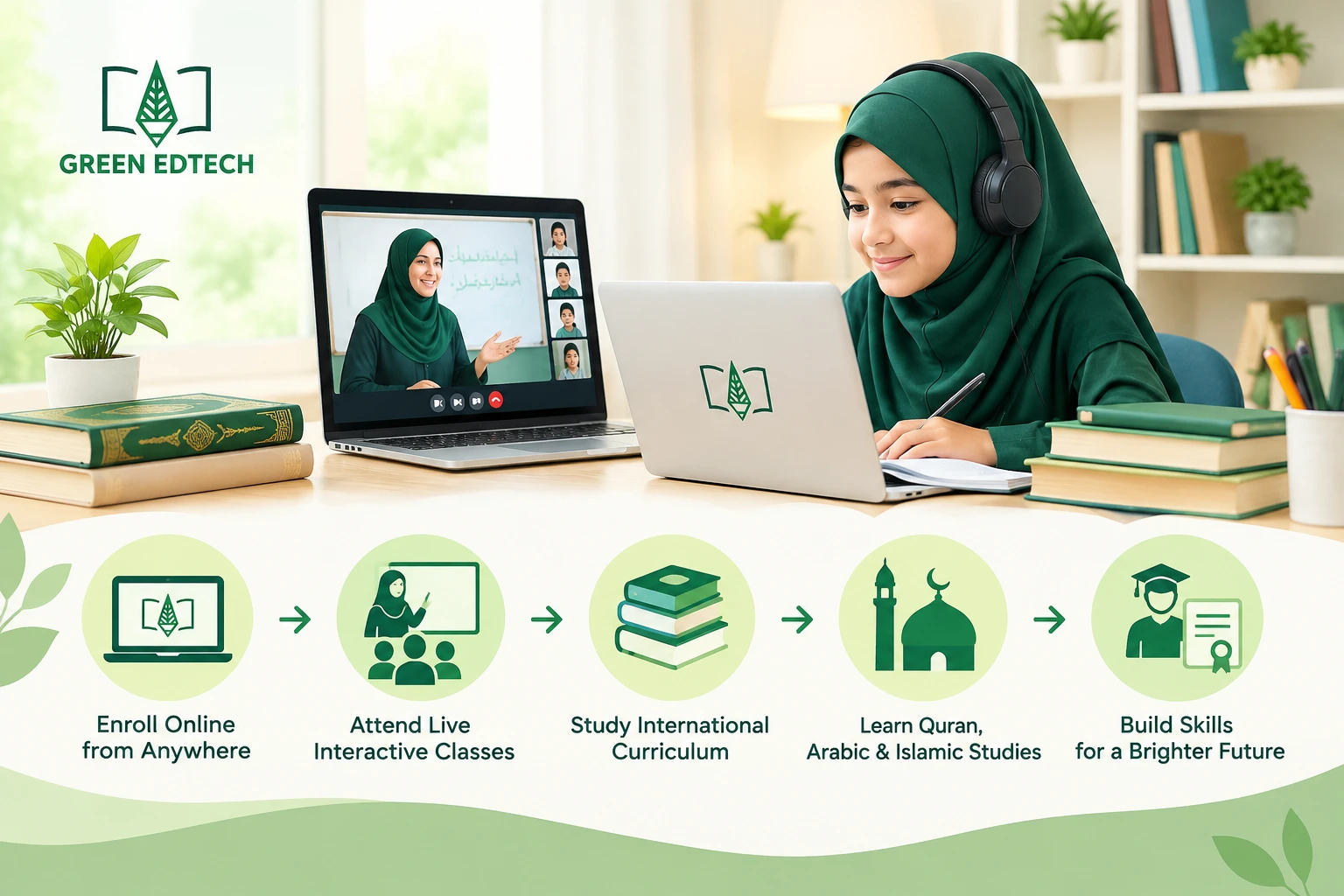
One example of this evolution is Green Edtech, an online faith-based schooling system that blends internationally recognized academics with digital accessibility. It shows how an online school model can support long-term learning, school application processes, and flexible education similar to traditional international school structures, while still reducing dependency on physical campuses and reinforcing modern learning needs. Green Edtech demonstrates how digital classrooms can support sustainable, flexible education in 2026 and beyond.
