

The rise of digital technology has transformed education across the globe, and Islamic education is no exception. Online Islamic school systems are becoming increasingly popular, offering flexible, accessible, and comprehensive learning opportunities for students who want to pursue Islamic studies alongside modern academics through Ed-tech for homeschooling, such as Green EdTech Homeschooling, from anywhere in the world.
What Are Online Islamic School Systems?
Online Islamic school systems are virtual platforms that deliver Islamic education through digital means. These systems offer structured courses in Quran recitation, Islamic jurisprudence (Fiqh), Arabic language, Islamic history, and more. Alongside these, many online schools also provide conventional subjects like Maths, Science, and English, ensuring students receive a well-rounded education.
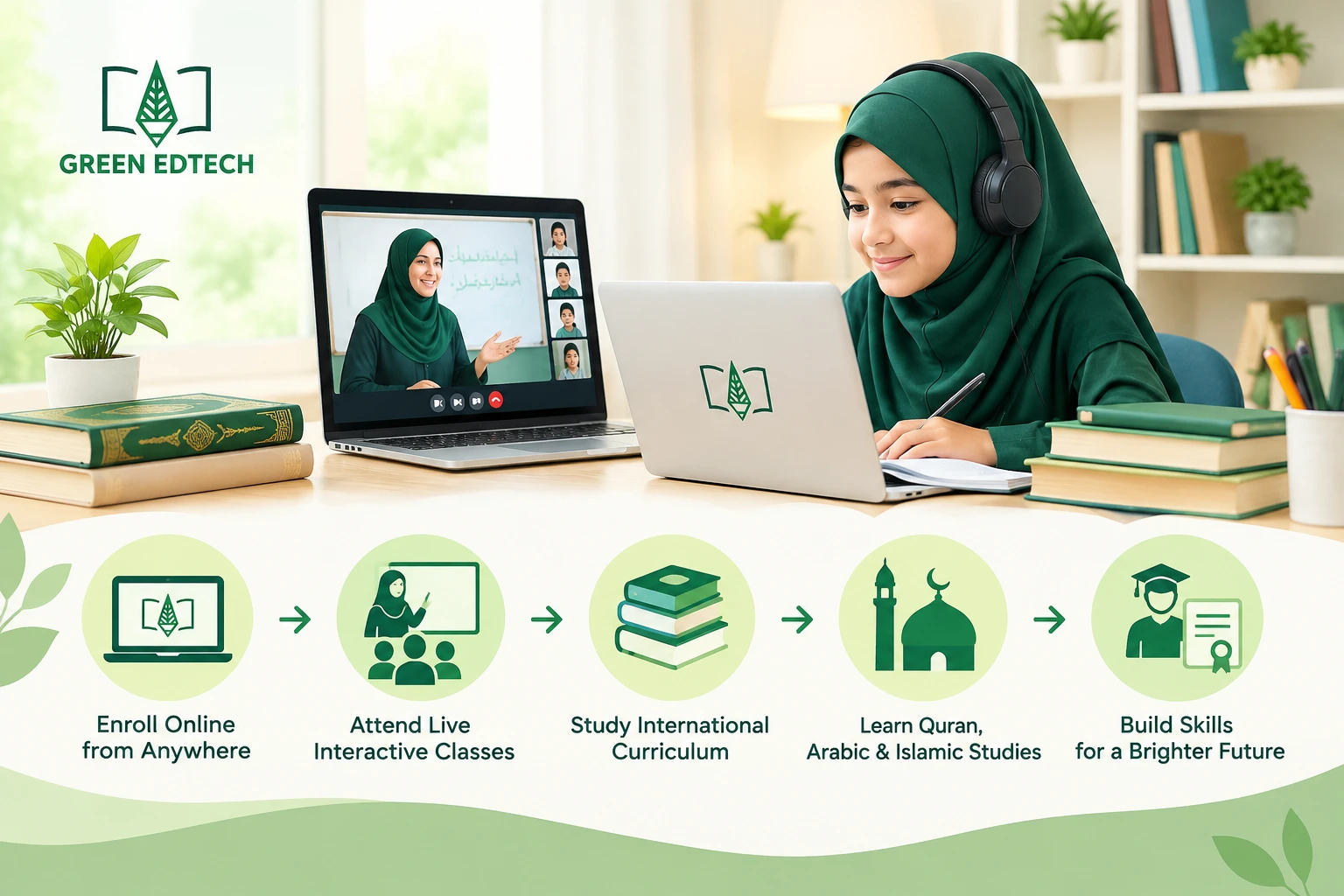
Students attend live classes via video conferencing or access pre-recorded lessons and interactive materials, making it possible to learn at their own pace and schedule.
Why Choose Online Islamic School Systems?
- Accessibility and Convenience
One of the biggest advantages is accessibility. Students from remote areas or countries without easy access to quality Islamic education can now connect with expert teachers and comprehensive curricula through their devices. - Flexible Learning Environment
Online systems cater to different learning styles and schedules. Whether a student prefers live interaction or self-paced study, online schools provide the flexibility to balance education with other commitments. - Global Community
Online Islamic schools often bring together students from diverse backgrounds and countries, fostering a global community. This diversity enriches discussions and broadens perspectives on Islamic knowledge and practice. - Integration of Modern Technology
Using multimedia, quizzes, discussion forums, and digital textbooks, online Islamic schools engage students in dynamic, interactive learning experiences that go beyond traditional classroom methods.
What Do Online Islamic Schools Offer?
Most online Islamic schools cover a broad range of subjects, including:
- Quranic Studies: Tajweed (correct pronunciation), memorisation (Hifz), and tafsir (interpretation).
- Islamic Jurisprudence (Fiqh): Understanding daily religious practices and laws.
- Hadith Studies: The sayings and traditions of the Prophet Muhammad (PBUH).
- Arabic Language: Reading, writing, and speaking to help students understand Islamic texts in their original language.
- Contemporary Subjects: Maths, Science, Social Studies, and English to ensure a balanced education.
Who Can Benefit from Online Islamic School Systems?
Online Islamic education is suitable for:
- Students living in areas with limited access to Islamic school.
- Families seeking supplementary Islamic education alongside regular schooling.
- Adults and working professionals looking to deepen their Islamic knowledge.
- Homeschooling families who want a structured Islamic curriculum.
Challenges and Considerations
While online Islamic school systems offer many benefits, it’s important to consider factors like:
- Reliable internet access to ensure uninterrupted learning.
- The online school quality and accreditation are important factors to consider when choosing an Islamic Studies program.
- The need for parental involvement or self-discipline, especially for younger learners.
The Future of Islamic Education
As technology continues to evolve, online Islamic school systems are poised to play a key role in the future of Islamic education. They make religious learning accessible through online registration, inclusive, and adaptable to the needs of modern Muslim families worldwide.
Conclusion
Online Islamic Studies school systems represent a powerful fusion of tradition and technology. They open doors to quality Islamic Studies education regardless of location, allowing students to grow academically and spiritually in a flexible, supportive environment. Whether you are a parent seeking the best for your child or an adult wishing to expand your Islamic Studies knowledge, online Islamic schools provide an excellent pathway to learning.
Frequently Asked Questions
Q1. What is an online Islamic school, and how does it work?
An online Islamic school is a digital education platform that combines Islamic studies with modern learning methods. Students attend live or recorded classes through online platforms, interact with qualified teachers, complete assignments, and access digital learning resources from home.
Q2. What subjects are taught in an online Islamic school?
Online Islamic schools may offer Quran reading, Tajweed, Hifz, Tafsir, Hadith, Fiqh, Arabic, Islamic history, and Islamic studies. Depending on the school, students may also study conventional subjects such as Mathematics, Science, English, and Social Studies.
Q3. How does technology improve Islamic education?
Technology makes Islamic education more accessible and interactive through live video classes, digital Quran resources, educational apps, recorded lessons, online assessments, and communication between teachers and parents. These tools can make learning more flexible while maintaining a strong focus on Islamic values.
Q4. What are the main benefits of choosing an online Islamic school?
Online Islamic schools provide flexibility, accessibility, personalized learning, and convenient access to qualified teachers. They can be particularly useful for families who live in areas where traditional Islamic schools or qualified teachers are not easily available.
Q5. How can parents choose the right online Islamic school for their children?
Parents should evaluate the school’s curriculum, teacher qualifications, teaching methodology, class size, technology platform, student support, communication with parents, and approach to Islamic values. It is also important to choose a program that matches the child’s age, learning level, and educational goals.
Q6. Can online Islamic schools balance religious education with modern academic learning?
Yes. A well-designed online Islamic school can integrate Islamic studies and values with modern academic subjects and digital learning methods. This balanced approach can help students develop religious understanding while gaining the knowledge and skills needed to succeed in today’s technology-driven world.
