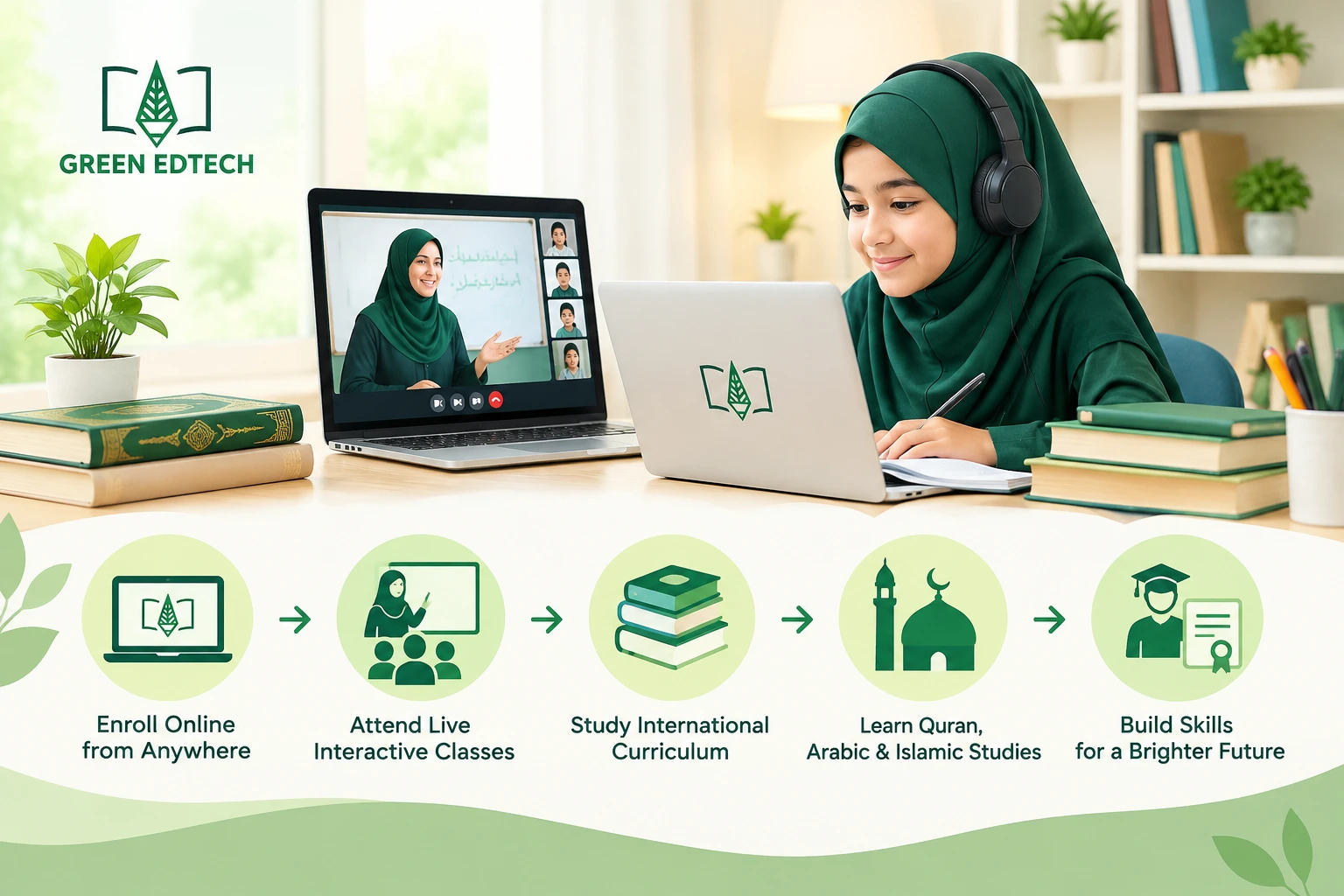

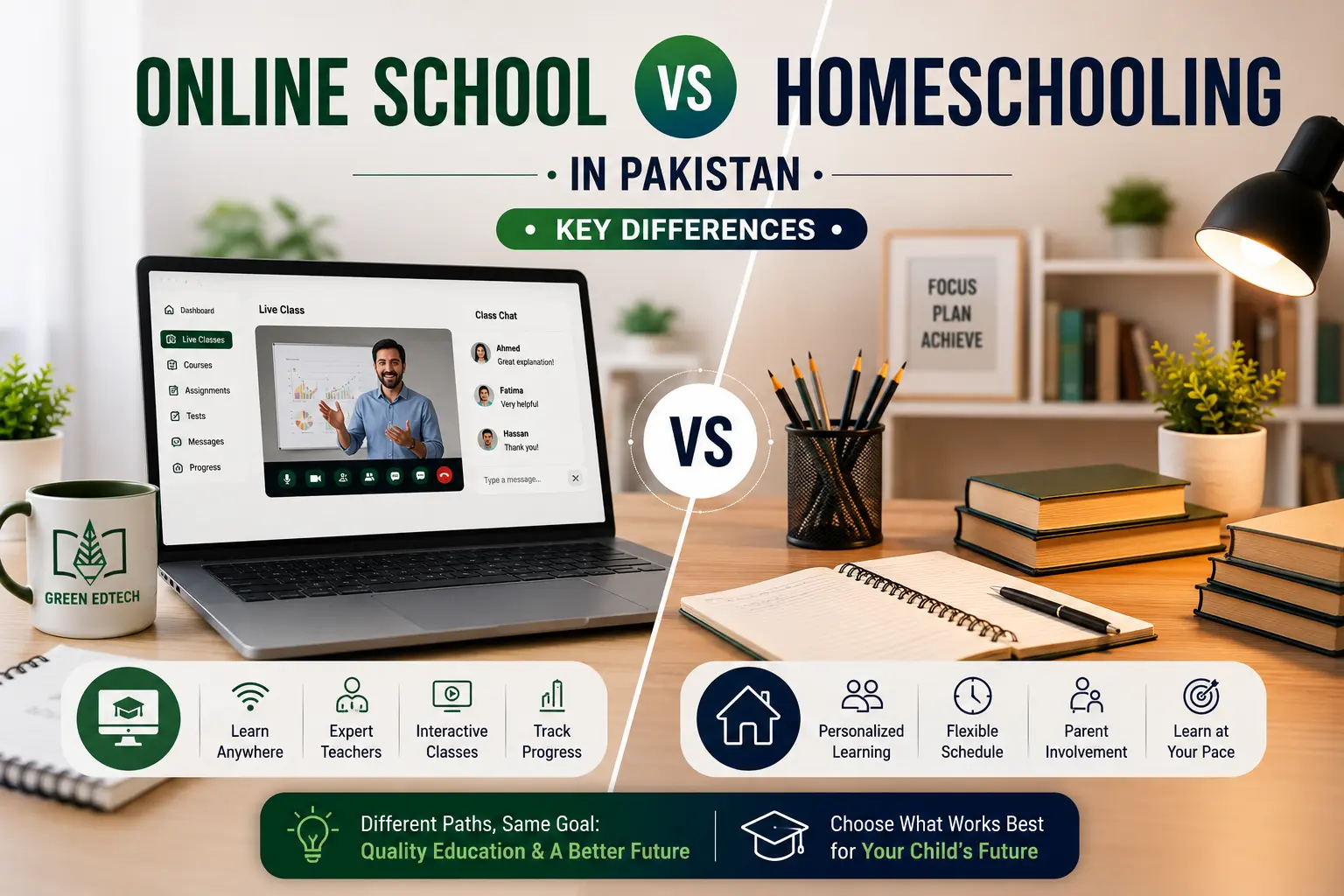
A Green EdTech school system will essentially take the school into a digital environment. A virtual school system allows students to learn from home; they can attend their classes, complete their assignments, and even communicate directly with their teachers.
How it actually works just depends on the school. Some stick entirely to live virtual classes, while others mix things up with real-time sessions, recorded lessons, and work you can do at your own pace.
So how does an online school work, and what does a normal day look like? This guide explains how a green EdTech schooling system runs and what parents should know before choosing one.
What Is a Green EdTech Schooling System?
A Green EdTech schooling system uses digital tools for daily learning. Students still follow a set course plan. They attend lessons, complete homework, take tests, and work with teachers.
The main change is the learning setting.
For example, a student can join a live class from home. They can also use online books and course files. If they need to review a topic, they can watch a recorded lesson.
Green EdTech describes its online school and homeschooling system. Its published information also lists programs from Preschool through Grade 12, along with O Level and A Level routes. In addition, students can study Islamic subjects, while Green EdTech also offers Pearson Edexcel-aligned qualifications. Pearson describes its Edexcel International GCSEs as globally recognised qualifications designed for international learners. Pearson Edexcel International GCSEs
This model allows families to access structured schooling without requiring students to travel to a physical campus each day.
How Does a Green EdTech Schooling System Work?
The process begins with enrollment, during which parents provide the child’s personal details and previous academic records. The administrators assess the information and assign the student to a suitable class.
1. Enrolled students can immediately start accessing classes and other online services.
2. Live lessons are an essential part of the curriculum.
3. They involve students reading, asking questions, and completing assigned tasks.
4. Another helpful tool is the Learning Management System (LMS).
5. Students can access the live lectures and video recordings of the classes through it.
6. In addition, they can submit their assignments, check the grades, and receive notifications.
7. The E-Library offers additional academic resources, including recorded lectures, presentations, coursebook PDFs, and weekly assignments.
Thus, students can review the material after class to fully understand what they have learned.
Key Components of a Green EdTech School
An online school may include:
- Virtual classrooms: Students join live lessons from home.
- Learning Management System (LMS): Keeps classes, grades, and school news organized in one place.
- Digital Learning Materials: Provides e-books, slides, and recorded lessons for easy access.
- Online Assignments: Makes downloading and turning in homework completely digital.
- Teacher Support: Connects students with teachers whenever they need extra help.
- Parent Access: Allows parents to monitor daily activities without hassle.
- Progress Tracking: Records grades to track real student progress over time.
- E-Library: Offers round-the-clock access to study files and old lessons.
What Does a Normal School Day Look Like?
Online students do not share the same routine. The day looks completely different depending on the grade and program. To find out what happens next, a student simply checks their daily schedule. Live classes start at specific times. During these sessions, students listen to the teacher, ask questions, and jump right into class activities.
Students may have additional work to complete after class. They may need to read, practice, and do homework. If a topic is difficult, a student can review the lesson again. For example, a student might watch a recorded math lesson after class.
Teacher contact can continue online too. When students get stuck, they usually reach out through school messaging apps or student portals. That connection matters more than you might think. This is supported by PISA 2022 research showing a positive relationship between teacher support and students’ learning engagement/pro activeness. OECD PISA 2022 Results
What Can Students Study Through Online Schooling?
Online schooling can cover many of the subjects taught in a traditional school.
These may include:
1. English and other languages
2. Mathematics
3. Science
4. Humanities
5. Social sciences
6. Computer and technology subjects
7. Islamic studies
8. Creative and skills-based subjects
Green EdTech offers Pearson Edexcel qualifications and accreditation certificates through a flexible virtual school system, alongside homeschooling programs and Islamic studies designed to support students’ academic and personal development.
Its published programs include Pearson Edexcel-aligned qualifications. Pearson describes its International GCSEs as globally recognised qualifications designed for international learners, with progression routes to further study and university. Pearson Edexcel International GCSEs
The school also offers O Level and A Level routes. Pearson states that its International AS/A Levels are designed for international learners progressing to universities around the world and are recognised by universities in the UK and internationally. Pearson Edexcel International AS/A Levels
Therefore, families can explore different study options as their child grows.
How Online Schooling Differs from Traditional Schooling
| Factor | Online Schooling | Traditional Schooling |
| Learning environment | Online | Physical classroom |
| Schedule | May offer some flexibility | Usually fixed |
| Resources | Mainly digital | Digital and physical |
| Location | Remote | School campus |
| Communication | Online and live | Mainly face-to-face |
| Progress tracking | Digital tools | School systems |
The difference is not always complete.
For example, a traditional school may use online tools for homework. An online school can also have fixed class times and formal exams.
The main difference is the place and method of learning.
Who Can Benefit from an Online Schooling System?
Online schooling can help Muslim families that need more choice.
For example, a family may live far from a suitable school. Another family may move between countries because of work. Some parents may also want an international course plan. At the same time, they may prefer to keep their child at home.
Green EdTech says its online school model serves students worldwide, including families in countries such as Saudi Arabia, Qatar, Kuwait, Oman, Bahrain, the UAE, the USA, Canada, and the UK.
Is Online Schooling Right for Everyone?
Not necessarily.
Some children enjoy learning from home. Others may need more face-to-face contact or close support. The home setting matters too. Students need a suitable place to study. They also need reliable internet for live classes. Therefore, parents should evaluate the child’s age and learning style. They should examine the child’s routine and school needs.
UNICEF says digital education can generate opportunities for children but also poses threats that parents must manage well. UNICEF: Child Protection in Digital Education
What Should Parents Look for in a Green EdTech School?
Before enrolling, parents can ask:
1. Accreditation: Is the school’s academic status clear?
2. Curriculum: Does it match your child’s goals?
3. Teachers: Are teachers qualified?
4. Student support: Where can students get help?
5. Assessment: How does the school check progress?
6. Safeguarding: How does the school protect students online?
7. Technology: What device and internet setup are needed?
8. Communication: How does the school update parents?
9. Fees: What does the program cost?
10. Schedule: When are live classes held?
11. Location rules: Are there country-specific rules?
These questions help parents understand what the school offers.
Green EdTech Schooling System: Review and Evaluation
Green EdTech combines international education, online learning, homeschooling, and Islamic studies. Its published programs include the Pearson International Curriculum. The school also offers O Level and A Level routes.
This gives Muslim families different options as their children move through school.
Teachers and Academic Support
Live teaching is an important part of Green EdTech schooling model.
1. The school says students join live, interactive classes with teachers.
2. The LMS also includes teacher support and Q&A features.
3. Students can use these tools when they have questions.
Still, parents should check the support available for the chosen program. Different age groups may need different types of help.
Online Learning Platform
Green EdTech uses an LMS for many daily school tasks.
1. Students can access live classes and recordings.
2. They can also submit homework and view grades.
3. The system also provides school announcements and progress information.
In practice, the LMS is more than a place to watch lessons. It also helps students manage daily schoolwork.
Assessment and Student Progress
1. The LMS includes grades and progress information.
2. The E-Library also provides weekly assignments.
3. This gives students regular work to complete.
4. Parents can also follow parts of the learning process.
However, assessment rules can differ by program. Parents should ask how tests and exams work for their child’s chosen course.
Parent Communication
Parents can take part in the online school system. According to Green EdTech, its LMS connects parents with teachers and students.
It also includes parent monitoring.
As a result, parents can follow school activity without visiting a campus. The exact form of contact may differ by program. Parents should ask what updates they will receive.
Flexibility and Accessibility
The E-Library supports flexible learning.
1. Students can access recorded lectures and presentations.
2. They can also use course book PDFs and weekly assignments.
3. These resources can help families with different schedules.
4. They can also help students review a lesson after class.
Areas to Consider
Online learning has some basic needs.
1. Students need a suitable device and reliable internet.
2. Green EdTech states that live classes require a strong broadband connection.
3. Parents should check their home setup before enrollment.
4. It is also important to review the fees and class schedule.
Parents should check the current fee details for the program they choose.
Green EdTech Schooling and the Future of Education
Online education is now part of the wider school system. Schools can use technology to share materials, track students’ progress, and communicate with parents.
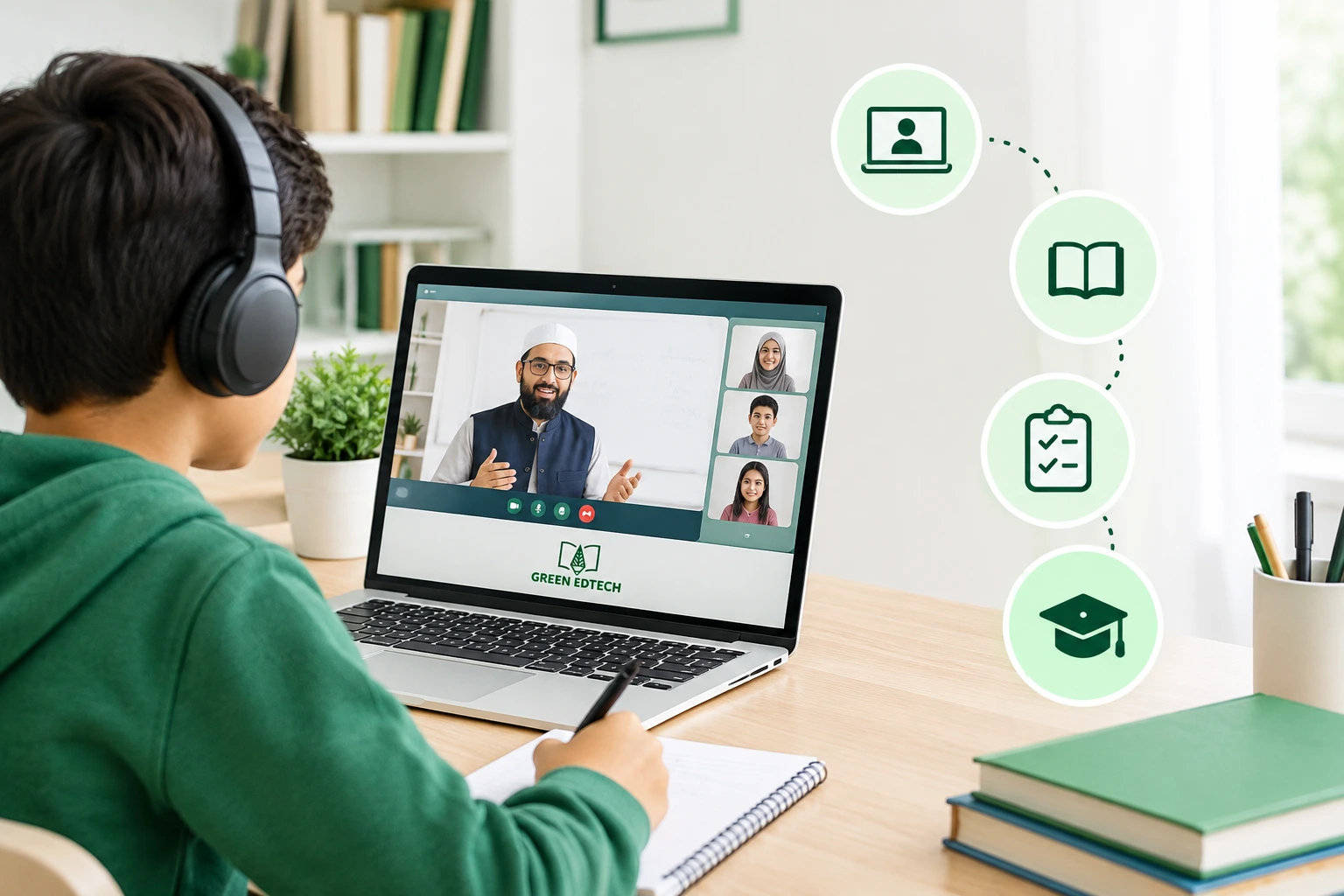
Technology alone does not guarantee effective learning. Students still need qualified teachers, structured lessons, meaningful feedback, and appropriate academic support. For this reason, parents should look at the full school model. The online platform is only one part of it.
Frequently Asked Questions
These frequently asked questions explain how Green EdTech online schooling model works, what students can access, and how parents can stay involved.
Q1. Is Green EdTech suitable for school-age students?
Yes. Green EdTech offers programs from Preschool through Grade 12. It also provides O Level and A Level routes.
Q2. How do students access their lessons and assignments?
Students can access live classes, recorded lessons, digital study materials, and assignments through the Learning Management System (LMS). They can review lessons after class and submit their assigned work online.
Q3. Can students study from other countries?
Green EdTech allows students from different countries to participate online.
Q4. How does Green EdTech deliver lessons?
The LMS is used to manage aspects of online learning. The LMS includes seminars, recorded sessions, digital study materials, and homework. The LMS lets teachers be available if a learner gets stuck.
Q5. What support does Green EdTech provide to online students and parents?
The LMS includes features such as Q&A, parent monitoring, homework, grades, and school updates. Students can also use the E-Library to review recorded lessons and other study materials.
Conclusion
A Green EdTech schooling system brings much of school into a digital setting. Students can attend live classes, use online resources, complete homework, and stay connected with teachers. Green EdTech combines this model with international education, Islamic studies, live teaching, an LMS, and an E-Library.
Choosing an online school means looking beyond the screen. If you’re considering Green EdTech homeschooling or exploring Ed-Tech for homeschooling, it’s important to make an informed decision by looking at these important areas. First, assess the curriculum quality. Next, evaluate the teaching staff. Then, check the schedule flexibility. Consider the student support systems, technology and learning platforms, costs, and how students are assessed and supported throughout their learning journey.
