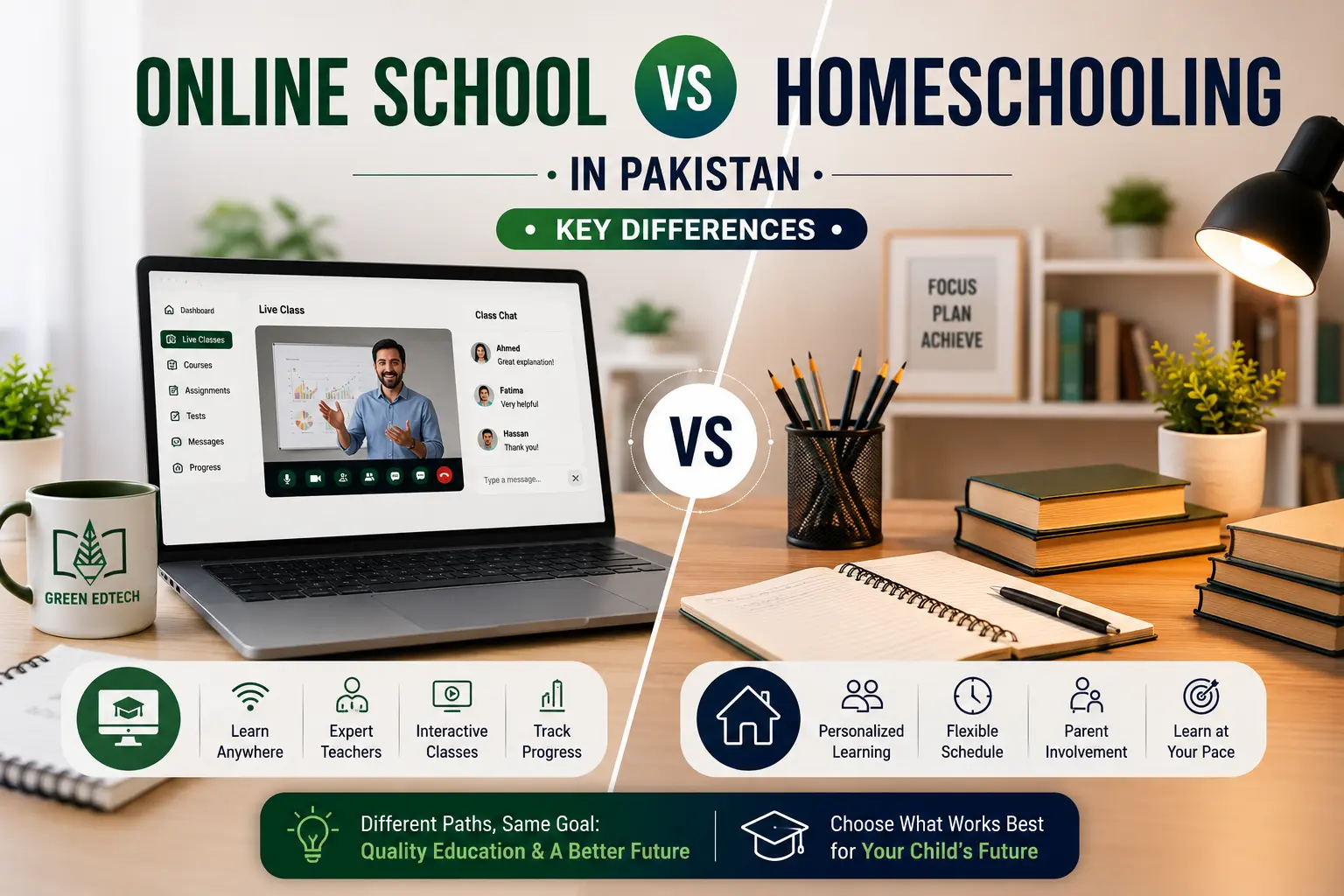
When comparing online schooling and homeschooling, many families want to understand which learning model better suits their child. Both provide alternatives to traditional classroom education, but they differ in teaching methods, curriculum, schedules, assessments, and parental involvement.
Online schooling offers structured virtual classes with teachers and an established learning plan, while homeschooling gives families greater control over how and when lessons are delivered. This guide explains the key differences between the two approaches, including flexibility, teacher involvement, costs, assessments, and parent responsibilities.
What Is Online School?
An online virtual school K-12 mirrors the structure of a traditional campus but delivers all instruction entirely online. Real teachers run all the live online school classes. Students log on from their computers to join the discussion, submit their work, and mark themselves present for the day.
The whole operation runs through a Learning Management System (LMS). Picture the software as the school building itself. Kids use the dashboard to hand in their daily work and track their latest scores. Teachers log into that same system to map out the week. They also use it to assign new quizzes and publish the final marks.
A Typical Day
Online schooling maintains a predictable daily schedule. A student might start the morning with a live Maths lecture. After a short break, the student completes a science assessment.
Educational Standards in Pakistan
Parents seeking online education in Pakistan prioritize approved programs. Most parents look for accredited online schools K-12 that teach the Cambridge or Pearson Edexcel curriculum in Karachi. Once you review the top options and handle the admission forms, students start working through the actual coursework.
What Is Homeschooling?
Parents are in charge of everything with homeschooling. You no longer have to follow strict school calendars. Your family gets absolute flexibility. Children progress at their own pace. You can shape daily lessons around their natural talents.
You also pick the specific homeschooling curriculum in Pakistan that fits your household goals. Parents can also mix in various homeschooling resources, like printed worksheets and digital libraries. When a subject becomes too complicated, you can get help. Many families hire private tutors. Others simply plug into specific online homeschooling in Pakistan modules for those harder classes.
What a Real Day Looks Like
Take Sara, for example. She spends her morning doing maths through customized homeschooling programs. In the afternoon, she visits a local robotics workshop, where she combines textbook reading with hands-on building. This shift toward practical skills is a great example of the E-Learning Trends Transforming Schools Today, reshaping the way students learn.
Online School vs Homeschooling: Key Differences
To decide, you simply have to know what a typical week looks like. The chart below breaks down the main differences so you can easily compare both systems.
| Feature | Online School | Homeschooling |
| Teacher | Qualified professional | Parent or private tutor |
| Curriculum | Highly structured | Fully flexible |
| Schedule | Fixed daily timetable | Adaptable routine |
| Exams | Regular assessments | Depends on the program |
| Social Interaction | Classmates and digital clubs | Parent-arranged activities |
| Accreditation | Often officially available | Depends on the chosen curriculum |
| Parent Role | Supportive monitor | Primary daily instructor |
| Technology | Essential | Optional depending on the subject |
No single option fits every household. The right choice naturally depends on your family routine and what you expect them to learn when comparing Online School vs Homeschooling in Pakistan. Before locking in a decision, you need to check your availability. Knowing exactly how much time you can spend guiding them is crucial.
How Online Schooling Works
- Qualified teachers run every live class, so you don’t have to worry about the heavy instruction load.
- Scheduled video sessions keep students accountable, so they actually sit up and pay attention.
- Replaying recorded lectures at night makes it simple to review tricky math topics.
- If you want international schooling online, the syllabuses align with global standards, keeping university admissions completely open down the line.
- You set the daily pace, so you can spend more time on difficult topics or move ahead when you understand a concept.
- Direct one-on-one attention means your child never gets lost at the back of a crowded classroom.
- Live sessions allow students to ask questions and interact directly with teachers, so they never feel left behind.
- Virtual projects and group discussions help students build teamwork skills, proving that social learning happens outside a physical classroom too.
How Homeschooling Works
- You set the daily pace, so you can take your time on difficult topics or move ahead when a concept makes sense.
- Direct one-on-one attention means your child never gets lost at the back of a crowded classroom.
- You build school hours around your life instead of fighting morning school-run traffic.
- Weaving Islamic studies and character building into the morning routine happens naturally.
- Families can travel for weeks at a time without asking a school administration for permission.
- It provides a calm, highly adaptable space for children with unique learning needs.
- Thanks to the active parent networks for homeschooling in Karachi, you will have no trouble getting your hands on textbooks or arranging social events for the kids.
Is Homeschooling Legal in Pakistan?
It is completely normal to wonder if teaching your kids at home is actually allowed. The short answer is yes. Pakistan does not have strict national laws regulating home education, so you are free to do so. Authorities have never banned families from teaching their own children. You have full freedom to skip the traditional campus and manage academics entirely on your own.
Most parents simply pick a recognized global syllabus or register with an approved digital school before board exams roll around. Taking this route guarantees students have zero trouble getting accepted into regular physical universities later on. Therefore, parents should independently verify the specific requirements of the examination board they plan to use.
Cost Considerations for Online Schooling and Homeschooling
Knowing the exact expenses helps you build a realistic household budget. Here is a direct look at what you will actually pay.
Cost of Online Schooling
- Some online programs in Pakistan charge a flat rate of PKR 7,000 per month.
- You must buy a reliable laptop and a fast internet connection.
- You have to pay mandatory fees for standardized external exams.
Cost of Homeschooling
- You buy your own academic curriculum and physical textbooks.
- Home tuition in Pakistan typically costs between PKR 8,000 and 30,000 per subject each month.
- You must pay external examination fees for private testing boards.
Neither path is automatically cheaper. What you pay ultimately depends on the curriculum and your private tutor setup. Typical O Level schools cost around PKR 50,000 to 150,000 monthly.
Choosing Between Online Schooling and Homeschooling
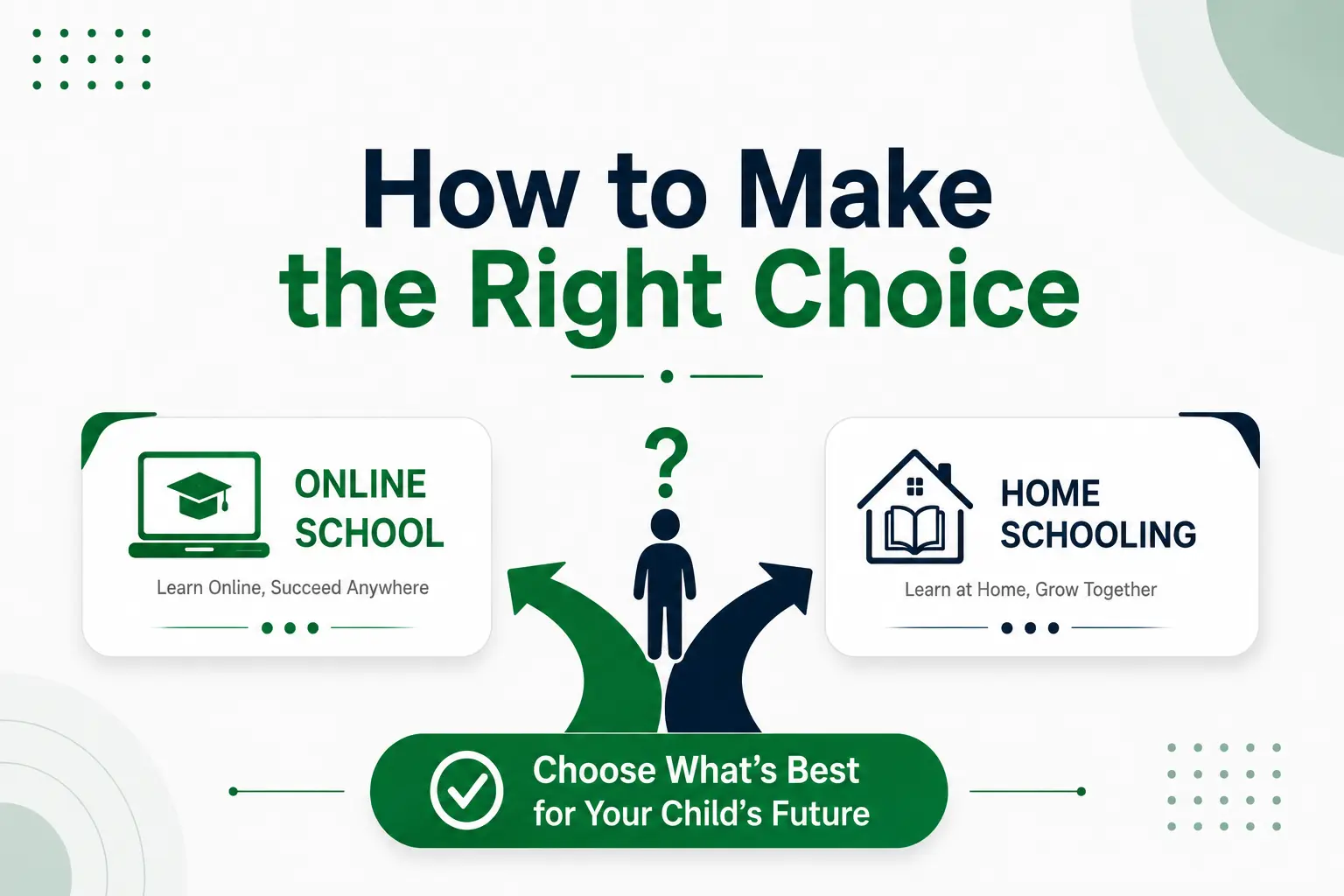
Online school vs homeschooling in Pakistan: the right choice just depends on your normal weekly schedule. Use this quick breakdown to figure out what works best for you.
When Online Schooling May Be Suitable:
- Your kid needs a strict daily routine to stay focused.
- You want certified teachers handling the teaching workload.
- You need official transcripts and recognized grades.
- Your child likes regular tests and seeing classmates on screen.
When Homeschooling May Be Suitable:
- Your family needs a schedule that shifts and changes.
- You want total control over what your kid learns.
- You actually have the hours to plan and teach every single day.
- Your child does better moving at their own speed.
Conclusion
Choosing between an online school vs homeschooling in Pakistan depends on your child’s learning style. You also need to look at your own daily routine and future goals. Whether you live locally or need an online school for an overseas Muslim family, modern platforms give you a strict structure. They feature certified teachers and follow a set syllabus just like a normal classroom.
Homeschooling flips that model entirely. It gives you total control over the schedule. Parents customize the lessons and set the daily pace themselves through flexible homeschooling programs. Review what your kid actually needs to succeed before completing the online school registration process. Evaluate exactly how much time you have to teach. Both paths work extremely well. Either choice builds a strong foundation for your child.
Frequently Asked Questions
Why should you choose Green EdTech?
You get a complete school experience without leaving the house. Check out our educational guides to see exactly how Green EdTech supplies certified teachers and a strict daily syllabus. Kids log into a secure digital system every day to get real academic support without dealing with a morning commute.
How has Green EdTech changed the way a school is viewed?
People used to think kids had to sit in a physical building to learn. Green EdTech changes that entirely. They use smart digital tools to hold students’ attention during live classes, similar to the approach used by Pearson Edexcel Schools in Karachi. Parents now realize learning can happen absolutely anywhere.
Why is online school better?
It gives your family more space. Kids skip the exhausting morning traffic and study in a quiet space at home. If a student misses a difficult concept during a live class, they can explore a free demo class or just hit play on the video recording to catch up later.
Is there any online school in Pakistan?
Yes, families across the country use them every single day. Whether you are specifically looking for an online school in Karachi or anywhere else in the country, finding a quality online school for kids is much easier now. Local platforms run complete virtual setups with qualified teachers and frequently follow Cambridge or Pearson Edexcel frameworks.
What is STEM education in Pakistan?
STEM stands for Science, Technology, Engineering, and Math. It encourages students to learn through doing and problem-solving rather than just learning from textbooks. It also prepares them for future careers in technical fields.
Which platform is best for online teaching in Pakistan?
Live classes almost always run on Zoom or Microsoft Teams. Digital classrooms transform traditional schooling, and Schools also rely on Google Workspace for daily file sharing. For grading and secure exams, many top private institutions set up their own custom digital portals.
Is homeschooling allowed in Pakistan?
Yes, you are allowed to do it. The government doesn’t strictly regulate how parents manage lessons at home. You can educate your kids yourself and simply register them as private candidates when board exam season arrives.
Why do Muslims homeschool?
Parents often want to mix Islamic values directly into daily lesson plans. This setup lets families teach religious studies, including options like an online Darse Nizami course, right alongside standard subjects like math and science. You run the classroom your way.
Is homeschooling the best form of education?
That depends entirely on your household. Home education is a great option if you want total control over the daily schedule. You just need plenty of patience, solid textbooks, and reliable homeschooling resources for parents, along with the actual spare time to sit and teach.
Which age is best for homeschooling?
You can pull a child into a home program at any point. Most parents like to start around ages five to eight. Little ones absorb new skills entirely through play. The older kids just take a little time to get comfortable with the schedule change.